Record Scanner for Vinyl & CD
- 4.7
- Rating
- 100.00K
- Installs
- Free
- Price
 Analysis by App-foxy
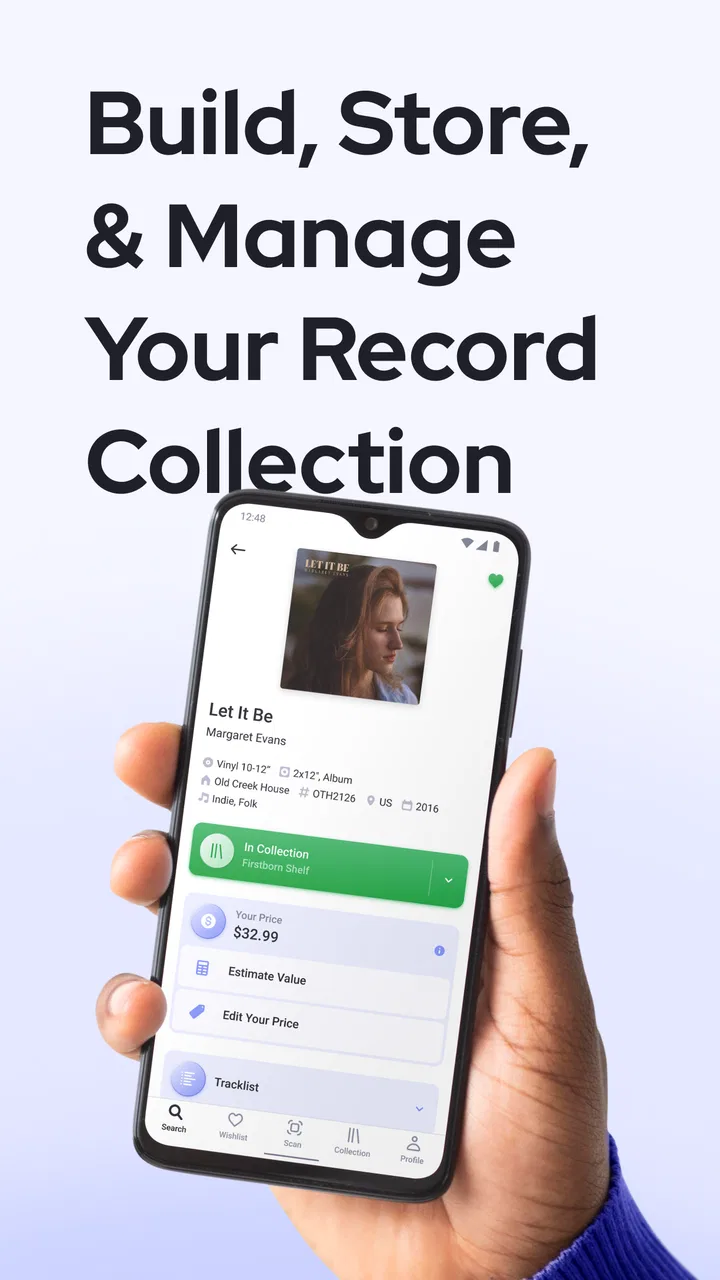
I downloaded Record Scanner for Vinyl & CD expecting a practical way to identify physical music rather than another general-purpose listening app. That distinction matters. This is a Music & Audio app from Great Music Apps, built around recognizing records and CDs, checking their prices, and helping turn a loose stack of albums into a more usable collection. It is free to install, carries a Teen content rating, and supports devices running Android 7.0 or later.
My first impression was that its appeal depends heavily on how often you handle physical music. If your shelves contain vinyl, CDs, or both, a scanner can remove a surprisingly annoying step: figuring out exactly which pressing or release is in front of you before you look for its value or add it to your records. If you mainly stream music and rarely buy second-hand albums, the novelty will probably disappear much faster.
From quick scans to a collection you can actually manage
I look at the collection side as the step that turns a quick identification into something useful later. In this section, I’ll consider how a steady scanning routine can help with duplicates, new finds, and follow-up research, while keeping the physical details of each copy in view. That practical workflow also raises a separate question: how comfortable is the app to read and navigate while you’re handling an album?
You May Also Like

 Pandora - Music & Podcasts
Pandora’s Music Is Easy to Start, but Harder to Recover
Pandora’s strength is its low-effort path from a seed to a station. Its weak spot is how much confidence it asks you to place in connection, setup, and quiet recovery.

 8 Ball Pool
 Is Built on Rivalries, Rematches, and Routine
A close look at the rivalries, rematches, shared routines, and unanswered safety questions that turn a quick pool match into a persistent mobile community.

 Samsung Music
’s Quiet Strength Is Playing What You Already Own
Its reach comes less from spectacle than from dependable access to a personal library. That simplicity is both the app’s strongest retention engine and its ceiling.

 AccuWeather: Weather Radar
AccuWeather Review: A Quick, Clear Forecast for Everyday Decisions
For everyday plans, the best forecast is the one you can understand quickly. AccuWeather makes rain timing, radar, and local conditions easy to act on, with a few trade-offs.

 Hill Climb Racing
Why Hill Climb Racing Still Turns Crashes Into One More Run
A tiny car, a bumpy hill and one more upgrade: Hill Climb Racing keeps resurfacing because its simple chaos makes every near-miss feel personal.

 AliExpress - Shopping App
AliExpress Makes Global Shopping Feel Personal, but Shoppers Bear the Risk
AliExpress turns a global marketplace into a pocket-sized discovery engine. Its reach is useful, its shopping loop compelling, and its trade-offs easy to miss.
More From Our News Desk
View All News


The first week: fast curiosity with a practical purpose
The most enjoyable part of using this app is the immediate feedback loop. You pick up an album, scan it, and get a starting point for identifying what you own. That feels more useful than manually typing an artist, title, and catalog detail into a search box, especially when a collection includes unfamiliar releases or albums bought years ago.
I found the strongest early use case was not scanning one favorite album. It was working through a neglected shelf. A box of mixed CDs or a stack of records can be difficult to assess because the titles are visible but the collection itself has no structure. A dedicated record identifier gives that pile a purpose: identify each item, check its market context, and decide what deserves better storage, further research, or a place in your active collection.
The app’s store summary describes it as a music record identifier, detector, and finder for price checking and album collection. In everyday terms, I would treat it as a first-pass tool rather than a final authority. A scan can help you recognize an album and orient yourself, but physical releases often vary by pressing, country, condition, packaging, and included inserts. The result is most useful when it starts your investigation instead of ending it.
That is an important expectation to set during the first week. The app can make identification less tedious, but it does not remove the judgment involved in evaluating a physical copy. A clean-looking sleeve may hide a worn disc, and two releases with nearly identical artwork may have very different collector interest. I would use the scanner to narrow the possibilities, then inspect the actual item carefully.
A realistic weekend workflow
Imagine finding a crate of albums at a charity shop or inheriting a family member’s CD collection. With a normal search engine, you might photograph covers, type titles one by one, open several pages, and keep notes somewhere else. Record Scanner for Vinyl & CD is more appealing in that situation because the identification step is designed around the object in your hand.
My preferred workflow would be to scan in small batches rather than trying to process an entire collection in one sitting. I would separate vinyl from CDs, keep uncertain results aside, and avoid making buying or selling decisions from a scan alone. This approach reduces the risk of turning a convenient tool into a source of rushed assumptions.
A useful habit is to photograph or note the details that the scanner cannot safely settle by itself: the condition of the sleeve, scratches, warped vinyl, missing booklets, unusual labels, and any visible catalog markings. That creates a second layer of information around the identification. The app handles the recognition stage; your notes handle the physical reality.
Another non-obvious benefit is that scanning can expose gaps in your own organization. You may discover duplicate albums, different editions of the same title, or records you remembered owning but could not locate. Even without treating every result as a definitive valuation, the process can help you decide which albums need cataloging and which are simply taking up shelf space.
What the rating and adoption suggest
The app has a 4.7 average from around 6.8 thousand ratings, with more than 100 thousand installs. Those figures make sense to me because the concept is focused and easy to understand: people with physical music often want a quicker route from cover to identification. The audience is narrower than that of a streaming service, but the usefulness can be much stronger for the right person.
Its current version is 1.12.5, and the app was released on October 8, 2018. That gives it a longer presence than a brand-new scanner experiment, which is reassuring for anyone who wants a tool to support a collection over time. Still, longevity alone does not guarantee that every scan will be perfect or that every release will be equally easy to identify.
Why the novelty can fade
During the first few sessions, scanning is naturally entertaining. You can test it on albums you already know, compare what it recognizes, and see whether it helps with obscure or untidy shelves. After that, the value becomes more practical. If you do not regularly buy used music, trade records, organize shelves, or check what you already own, there may be little reason to open it again.
This is the central question for me: does it create a repeatable habit? It can, but only when connected to a real routine. A collector who visits record shops, catalogs purchases, or periodically reviews duplicates has a reason to return. Someone who scans a few familiar albums for fun may run out of meaningful tasks quickly.
Month-to-month value for collectors
After the initial excitement, I would judge the app by whether it reduces repeated friction. The best long-term role is as a checkpoint whenever new physical music enters your home. Scan purchases soon after bringing them inside, verify what you already have before buying a second copy, and use the identification process when sorting boxes that have been untouched for months.
This is where the collection angle becomes more important than the individual scan. A single identification is useful for a minute. A consistent cataloging routine can save time every time you shop. Before buying a familiar album at a market, you can check whether your shelf already contains it. When clearing space, you can identify items before deciding which ones deserve more research. The value accumulates through these small decisions rather than through constant entertainment.
I would also use it as a preparation tool before visiting a record fair. A short list of albums you own, albums you are looking for, and duplicates you want to avoid can make browsing calmer. The app is not a replacement for specialist knowledge, but it can help turn a vague collecting interest into a more deliberate search.
Price checking needs the most caution. A displayed price or market reference should be treated as an indication, not a promise of what your copy will sell for. Condition, completeness, demand, and edition details can change the result substantially. If you are pricing a valuable collection, compare the identified release with the physical copy in front of you and, when necessary, consult more specialized sources.
How it compares with ordinary alternatives
A general search engine remains better when you already know the exact title and need broad background information, reviews, lyrics, or listening options. A streaming app is better for discovering music and playing it immediately. A spreadsheet is better for custom fields, personal notes, insurance records, or a collection that includes items outside the app’s focus.
Record Scanner for Vinyl & CD sits between those options. Its advantage is the object-first workflow: start with the record or CD, identify it, and use that result as a basis for collection work or price research. Its disadvantage is that it may not satisfy someone who wants a complete personal database with highly customized organization. I would choose this app for reducing identification effort, not for replacing every other collecting tool.
There is also a trade-off between speed and certainty. Manual cataloging takes longer but encourages you to inspect every detail. Scanning is faster and more convenient, yet convenience can make users overlook edition differences. The smartest approach is hybrid: let the app handle the repetitive first pass, then manually confirm anything that affects a purchase, sale, insurance decision, or prized part of the collection.
Maintenance: the part that determines whether it stays installed
The maintenance burden is less about daily app care and more about maintaining the information around your collection. A scanner is only as useful as the discipline behind it. If you identify albums but never separate duplicates, record condition, or keep track of what has moved to another shelf, the collection can become confusing again.
I recommend scanning in a consistent order and using a simple personal rule for uncertain results. For example, keep confirmed identifications in one group and questionable ones in another until you can inspect the label, spine, or catalog number. This prevents a confident-looking match from quietly becoming a permanent mistake.
Physical storage matters too. Do not handle vinyl by the playing surface while scanning, and avoid placing sleeves on a dirty floor or damp table during a long sorting session. The app is meant to help with collection management; it should not encourage careless handling of the objects being cataloged.
There is also a financial maintenance question. The app is free, but it includes in-app purchases ranging from $0.99 to $199.99 per item. That makes it especially important to understand what you need before spending anything. A casual user may be perfectly satisfied with the free experience, while a serious collector should consider whether an optional purchase genuinely improves a recurring workflow rather than merely extending the first-week experiment.
I would approach those purchases slowly. First scan the kind of albums you actually own, see whether identification fits your routine, and decide whether the app saves enough time to justify additional spending. The highest-priced option is not automatically the right choice for a collection, particularly if your main problem is organization rather than recognition.
Where fatigue appears
The first source of fatigue is repetition. Scanning a shelf is satisfying at the beginning, but hundreds of nearly identical cases can turn the task into administration. That is not a flaw unique to this app; it is the nature of cataloging. The app can shorten each step, but it cannot make every album equally interesting.
The second is uncertainty around physical editions. A scan may identify the album correctly while leaving you to determine whether the copy is a particular pressing or release. If your goal is a rough personal inventory, that may be enough. If your goal is accurate valuation, you will need patience and closer inspection.
The third is the temptation to confuse an estimate with a saleable price. Collectors can become frustrated when an apparently valuable record does not attract interest because of condition or because the market reference applies to a different edition. I would use the price feature to decide what deserves attention, not to assign instant value to everything on the shelf.
Another possible source of fatigue is a mismatch between the app and your collection. If you own mostly digital albums, homemade compilations, promotional discs, or releases with unusual packaging, a scanner may offer less help than a flexible manual catalog. In that case, a spreadsheet or notes system could be more adaptable, even if it requires more typing.
Who will get lasting value from it?
I think this app is a good fit for people who buy used vinyl or CDs, are sorting a large inherited collection, want a quicker way to identify second-hand finds, or regularly need to check whether they already own an album. It is also useful for a beginner who wants to learn how a physical collection can be organized without designing a database from scratch.
It is less suitable for someone seeking a full listening experience, social discovery, detailed music journalism, or a universal inventory system. It is not the first app I would choose for someone whose main interest is playing music on a phone. The focus is physical media, identification, and collection-related research, so the benefit drops sharply outside those tasks.
Age classification is Teen, which is straightforward for a music cataloging utility. The minimum operating-system requirement is Android 7.0, so it remains accessible to users with older compatible devices. I would still judge the experience on the phone you actually use, because scanning comfort depends on camera handling, lighting, and how easily you can move between the album and the screen.
My long-term verdict
After the novelty fades, Record Scanner for Vinyl & CD earns its place when it becomes part of a collector’s arrival-and-sorting routine. Scan new purchases, flag uncertain matches, check duplicates before buying, and use price information as a research prompt rather than a final answer. Those habits give the app recurring value instead of leaving it as a one-afternoon curiosity.
My recommendation is simple: install it if physical music regularly passes through your hands, but judge it by the time it saves over several collection sessions. The focused design is more useful than a general search box for identifying records and CDs, while the limitations around edition details and valuation mean that careful collectors should still verify important results.
Great Music Apps has made a free tool with a clear audience and a practical reason to exist. Its 381 reviews and strong average rating show that many users find the concept worthwhile, but the real test is personal: will you scan often enough to maintain a collection? If yes, it can become a dependable first step whenever an unknown album appears. If not, the usual search engine, notes app, or spreadsheet may be the better long-term home for your music records.
FAQs for Record Scanner for Vinyl & CD
01What is Record Scanner for Vinyl & CD used for?
Record Scanner for Vinyl & CD is designed to help music enthusiasts identify and organize physical music collections. You can scan or search for vinyl records and CDs, view album information, and keep track of items in your collection. It is particularly useful when sorting through second-hand purchases, checking duplicates, or creating a digital catalog of your records and discs.
02How does the app identify a vinyl record or CD?
The app generally uses the record or CD barcode, catalog number, cover details, or searchable release information to find a matching edition. Results may depend on the quality of the scan and the availability of data in its music database. Rare pressings, regional releases, promotional copies, and albums with several similar editions may require manual searching or verification.
03Can Record Scanner for Vinyl & CD identify the exact pressing or edition?
It can often help locate a specific release, but users should not assume that the first result is always the exact pressing. Vinyl and CD editions may share the same artwork while having different labels, years, countries, catalog numbers, or mastering details. For accurate identification, compare the app’s result with the information printed on the sleeve, label, matrix, or disc.
04Does the app work without an internet connection?
Most identification and cataloging features may require an internet connection because the app needs to search an online music database and retrieve release information. Basic details already saved on your device may remain available offline, depending on the version and platform. For the smoothest experience, scan records while connected to Wi-Fi or mobile data, especially when handling a large collection.
05Is Record Scanner for Vinyl & CD free to download and use?
The app’s availability, pricing, and included features can vary between Android and iOS, and some functions may be limited by advertisements, subscriptions, or in-app purchases. Before downloading, check the official store listing for the current terms. Also review privacy permissions and account requirements, particularly if you plan to synchronize your collection or use cloud-based scanning features.
Pros
- Quickly identifies many vinyl records and CDs from cover images.
- Useful for checking pressings while browsing thrift stores or record shops.
- Saves scanned albums into a personal collection for later reference.
- Helps organize physical media without manually entering every album detail.
- Simple interface makes occasional cataloging easy for beginners.
Cons
- Recognition may fail with damaged
- blurry
- or uncommon album artwork.
- Edition details can be inaccurate
- especially for regional pressings.
- Some features may require an account or paid subscription.
- Large collections can take time to scan and organize efficiently.
- Results depend on the quality and completeness of the app’s database.

Record Scanner for Vinyl & CD
Gallery